
Be honest. Are you someone who can’t slow down? If yes, are you non-stop busy because:
- You just care.
- You’re responsible.
- There’s so much to do.
- Slowing down feels irresponsible, indulgent, or risky.
So you do what most good leaders do. You push. You work and work and work. You answer one more email. You jump on one more call. You tell yourself you’ll pause later — ideally when things calm down.
(Let me know if that ever happens!)
And for a long time, it works. Decisions made at speed—because
The Pattern Works. Until It Doesn’t
Eventually, the cost shows up somewhere: health, culture, judgment, retention, or all four at once. And by the time it’s visible, it’s usually systemic—not personal.
Your pace has quietly become your company’s pace.
Not because you announced it. But because everyone’s watching you.
Here’s the Part No One Puts in Leadership Books
Your actions are more believable than your values statement. What you do matters more than what you say.
When you’re always “on,” people learn that being “on” is what gets rewarded. When you respond instantly, delay starts to be perceived as disengagement. When you never stop, they don’t either — even when stopping would be smarter.
Reduce Burnout
Christina Maslach’s research is clear: Burnout is not an individual failure—it’s a workplace design problem. You can’t put “well-being” in a values statement and model urgency all day long. People believe behavior, not posters.
Deloitte’s research on burnout reinforces this: leader behavior is a stronger predictor of team burnout than workload alone.
Mirror – Reflection Questions
- When was the last time you stopped during the workday without calling it “catching up”?
- What does your behavior teach people about what really matters here?
- What are you protecting by moving so fast all the time?
Slowing Down Is a Strategic Advantage
You’ve been trained to believe speed equals competence. The evidence is less flattering.
Stanford research shows productivity drops sharply once people pass about 55 hours a week. After that, mistakes multiply, judgment narrows, and everyone gets very busy fixing problems that didn’t need to exist.
There’s a reason Microsoft shifted how it operates under Satya Nadella. One of the biggest changes was tempo. Fewer reflexive reactions. More learning. More room to think. The payoff was renewed relevance and growth.
Toyota learned this decades ago. They slow things down on purpose — even stopping production — because fixing a small issue early is far cheaper than cleaning up a fast one later.
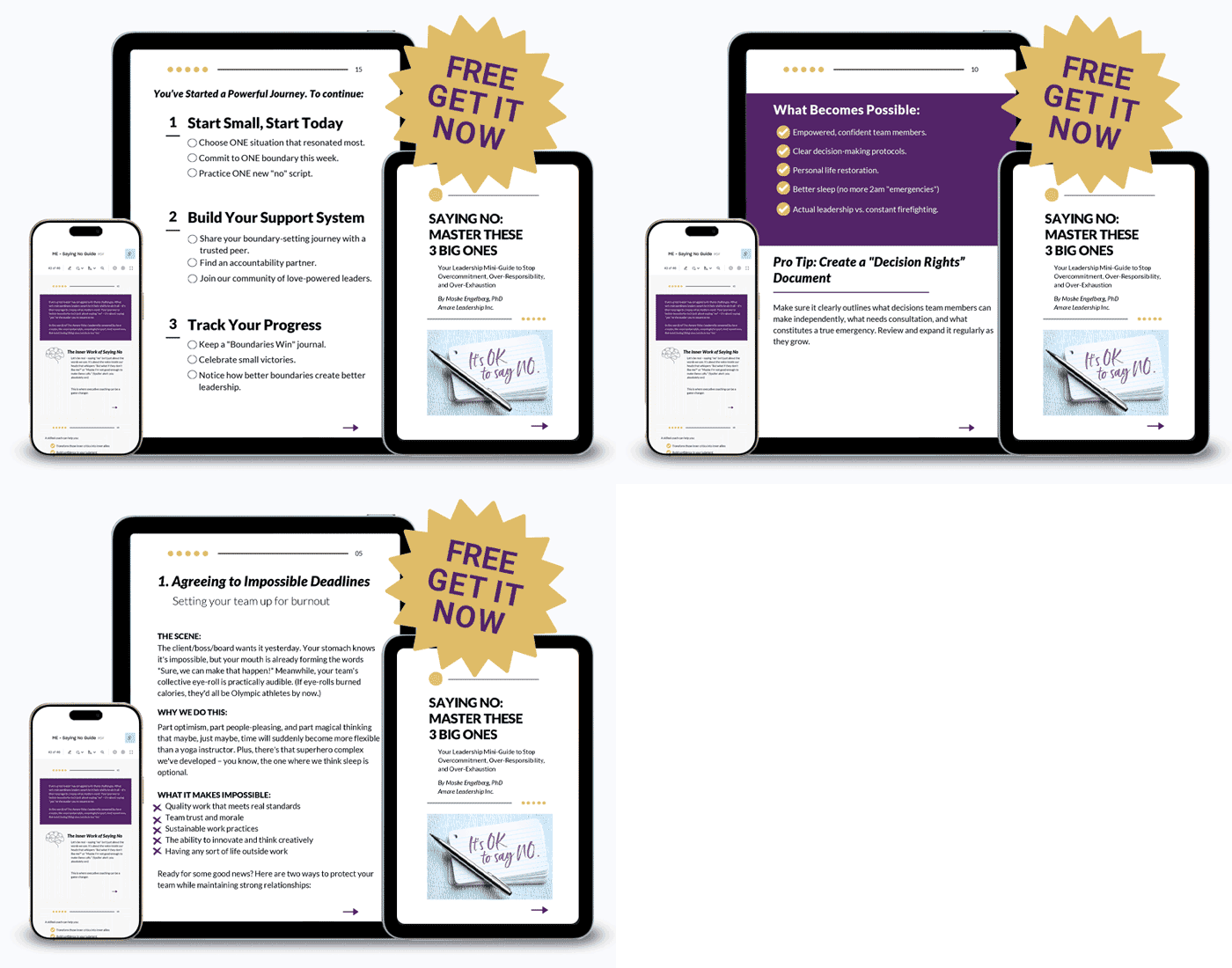
GET YOUR FREE “HOW TO SAY NO” LEADERSHIP GUIDE HERE. Set healthy limits, let go of outdated beliefs, and watch your leadership power grow. SHARE IT TOO.
Door into Action – 5 Amare Steps to Slow Down
1. Name the payoff. Be honest about what constant busyness helps you avoid — conflict, uncertainty, or slowing down long enough to feel something.
2. Slow one thing down. One decision. One meeting. One habit. Implement it today.
3. Make pauses visible. Let people see you stop so they know it’s allowed.
4. Prioritize recovery. Treat rest like maintenance, not indulgence. Make it a requirement!
5. Watch the system respond. Your shift will ripple faster than any memo.
Amare Team Talk
At your next team meeting, ask: “Where are we moving so fast that we might be making things harder than they need to be?”
Then resist the urge to fix it immediately. Listening is already a pace change.
Your Inspirational Challenge
Slowing down isn’t doing less. It’s a way of leading with enough presence to notice what’s actually happening.
You don’t need to prove your commitment by running yourself — or your people — into the ground. The leaders who last aren’t frantic. They’re deliberate. They choose their pace instead of being chased by it.
Try slowing down by 10 percent this week. Not forever. See what happens – inside and out.
Love,
–Moshe
Today’s Amare Wave Wednesday Quote
“Nature does not hurry, yet everything is accomplished.”
— Lao Tzu
Click here and read more Amare Wave Wednesday newsletters on related topics:
Gratitude and Resilience: The “Power Combo” Great Leaders Use in Tough Times
When “No” Means Go: How Constraints Spark Creative Leadership Breakthroughs
Pebbles in Your Shoe: Stop Tolerating Tiny Annoyances That Take a Big Toll on You and Your Culture
You Don’t Need a Crisis to Find Your Mojo—Here’s How Great Leaders Do It
Stop Ruminating, Start Savoring: A 5-Step Mindful Shift for Leaders