
I’ve had the opportunity to coach many high-performing leaders during my career. To a person, all had a private story they repeated behind the closed doors of the mind.
Consider the following:
A brilliant mid-career executive still proving she’s as good as her “favorite child” brother, even after decades of her obvious success.
An accomplished young Fortune 500 company president still hearing the voice of his late mother, saying he’s never quite enough.
A talented and award-winning musician still craves major fame in order to show up the mean girls who bullied her in elementary school. These are disparate lives in different domains — yet all share a common thread: an inner story written long ago that no longer applies, yet still directs their behavior today.
How We Get “Stuck” by Our Stories
Stories build organizational culture — we know that. They also shape the internal culture of our hearts and minds, the one guiding how we lead and live. When that internal culture is dominated by an outdated story, we wind up stuck and unconsciously acting it out.
Your Personal Leadership Story?
Within you lies an internal narrative: your personal leadership story. This may be very different from the external stories you tell.
Research into narrative identity shows that the personal stories we carry (“I am capable,” “I am not enough,” “I must prove”) deeply influence how we lead and engage with others. Internal stories become cognitive frameworks that shape what we notice, how we respond, and what we believe is possible.
Window: When Stories Become Traps
- For the executive: the story of “I must be as good as my brother” set up a relentless chase. Her wins felt good but were never enough to free her from feeling “less than.”
- For the company president: the story of “I’m never enough” kept him in performance mode. Too hard on himself, always on guard, and rarely at peace.
- For the musician: the story of “I’ll be famous so I can win” kept her living someone else’s script (and someone else’s pain) rather than her own purpose.
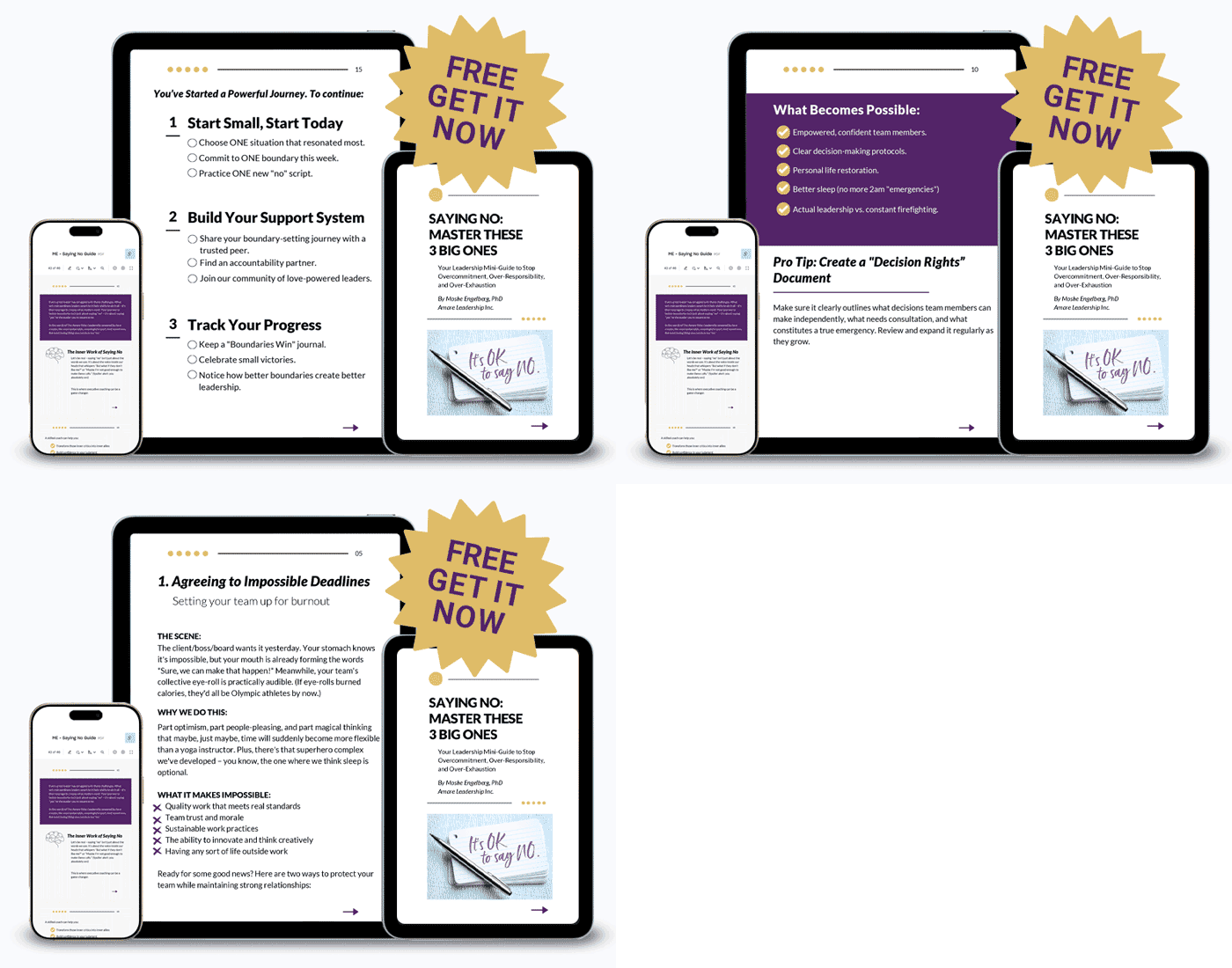
GET YOUR FREE “HOW TO SAY NO” LEADERSHIP GUIDE HERE. Set healthy limits, let go of outdated beliefs, and watch your leadership power grow.
What Once Protected You, Now Holds You Back
Your old stories once served you beautifully — helping you survive, succeed, and make sense of your world. They gave structure, drive, and even protection when you needed it most. As your leadership evolves, those same stories become outdated operating systems. What once kept you safe now keeps you small. It’s time to thank the story for its service, honor the value it brought, and let it go—because it no longer fits the leader you’ve become, or the future you are here to create.
Mirror: Self-Reflective Questions
- What old story do you tell yourself to justify your way of being and leading?
- How does that story shape how you act and how you relate to others?
- If you were fully free of that story, what new leadership possibilities would open up for you and your team?
Door into Action: 7 Amare Steps to Let Go of Your Old Stories
1. Pause and name your script. Choose a repeated pattern (e.g., over-delivering, hiding mistakes, proving worth). Write the one-sentence story behind it (e.g., “If I’m not perfect, I’m not good enough”).
2. Trace the origin and consequence. Spend 10 minutes reflecting: When did that start (childhood, early career, family message)? What did it give you? And what has it cost you — emotionally, relationally, and in leadership?
3. Draft a new story aligned with your purpose. Write a short sentence that better reflects who you want to lead as (e.g., “I lead from worth, not from proving”). Speak it. Feel it resonate. Post it where you’ll see it often.
4. Symbolically release the old story. In a quiet moment, write the old script on paper, then tear, burn, or otherwise let it go. Say out loud: “Thank you for protecting me. I release you now.”
5. Embed the new story into your leadership rhythm. At your next team meeting or one-on-one, share the new story you’re stepping into. Invite your team to reflect on the internal story they bring. Align it with the culture you’re building.
6. Maintain quarterly check-ins. Every three months, ask: “Is this story still serving me? My team? The future we’re building?” If not—adapt, rewrite, release again.
7. Anchor in presence not proving. Before diving into emails or meetings, take one minute to pause. Close your laptop, feel your feet on the ground, and take a few slow breaths. Then ask yourself, “How do I want to show up as a leader today?” Let the answer settle in and start your day leading from that steadier, truer place.
Amare Team Talk
At your next leadership team meeting, ask: “What’s one story we tell about our team or company that might be limiting us?” Go around the room. Listen without judgment. Then, as a team, pick one story you’ll rewrite together and commit to living differently for the next 90 days.
Your Inspirational Challenge
“Story” by itself is not the villain. In fact, it’s one of your greatest tools, but only if and when it’s conscious, aligned, and serving the wave you’re here to ride.
So here’s the challenge: let yourself live a story you choose, not one that’s choosing you. Drop the old script. Lead from the rewrite. Your next act is waiting.
Let your internal world whisper the narrative of contribution, worthiness, and freedom — not proving, not surviving. Show up authentic and whole. You’ve earned the rewrite. Your leadership deserves it.
I’m with you,
–Moshe
Today’s Amare Wave Wednesday Quote
“These narratives aren’t fixed; they evolve as we do. When we become aware of them, we can choose whether they serve us or whether it’s time to rewrite them.”
— Anita Chatburn, Leadership Circle
Click here and read more Amare Wave Wednesday newsletters on related topics:
You Don’t Need a Crisis to Find Your Mojo—Here’s How Great Leaders Do It
How to Stay the Course and Lead Effectively When the World Outside Seems Crazy
Fulfill All Your Leadership Potential by Facing & Freeing Your Deepest Fear
Move Beyond Your Role to Remember Who You Are: 5 Steps to Embrace Your True Self as an Authentic Leader
When “No” Means Go: How Constraints Spark Creative Leadership Breakthroughs
Original article published on Inc.com.